


Integrated with AI and Generative AI
Design Thinking and Innovation with AI
- Get certified by IIM Kozhikode, ranked #3 by NIRF (2025)
- Real-world learning with a capstone project and case studies
- GenAI and AI taught by top IIMK Faculty
- Drive innovation with AI and Generative AI
Upcoming application deadline: Invalid liquid data
Design Thinking and Innovation Enhanced with Generative AI

Programme Overview
The Design Thinking and Innovation with AI Programme by IIM Kozhikode is a transformative learning experience tailored for professionals seeking to lead innovation in a digitally driven world. This professional certificate programme blends the principles of design thinking, AI integration, and strategic innovation to help participants solve complex business challenges with empathy and data-backed creativity.
Whether you're a product strategist, UX/UI designer, AI consultant, or a business leader, this programme equips you with the tools to ideate, prototype, and implement solutions that drive measurable impact while learning directly from the renowned faculty at IIM Kozhikode, who bring a blend of academic rigour and real-world insights to every session.
From IIM Kozhikode’s Thought Leaders to You
Why Design Thinking and Innovation with AI?
60%
29%
87%
Who Is This Programme For?
Designers, Design Engineers, Creative Managers, Art Directors, UX Designers, UX Design Consultants, UI Designers who aim to integrate AI and design thinking into creating innovative, customer-centric solutions.
Product, Marketing, Branding, Growth, and R&D Managers looking to harness AI and design thinking to create impactful, market-driven innovations.
Entrepreneurs and Business Owners such as CXOs, Managing Directors, Founders, Presidents, and Chief Strategy Officers aiming to scale businesses through customer-focused innovation, enhanced by AI.
Innovation and Growth Consultants keen on leveraging AI-driven design thinking to deliver transformative results for their clients.
Learner Testimonials



Programme Highlights

Recorded Video Lectures Delivered by Renowned IIMK Faculty

Hands-on Learning with Capstone Project and Case Studies

15 Assignments* and Quizzes

Office Hours and Discussion Boards

In-depth Exploration of AI and Generative AI in Driving Design Thinking and Innovation

Certificate of Completion from IIM Kozhikode

1-day Optional Networking Event at IIM Kozhikode**
Note:
This is a self-paced online programme. Thus, faculty will not be a part of weekly live sessions or any other live interaction in this programme. We have a curated panel of eminent industry practitioners who will be conducting the weekly live doubt-clearing sessions.
The final number of quizzes, assignments and discussions will be confirmed closer to the programme start. *Assignments are graded either by industry practitioners who are available to support participants in their learning journey and/or by the Eruditus grading team.
**The optional on-campus networking event is a one-day programme that allows learners to connect with peers from different cohorts at the IIMK Campus. The fee for this event is INR 13,000 per day as the optional in-campus fee for twin-sharing mode of accommodation and Rs. 15,000 per day for single accommodation. Charges may be applicable in the equivalent amount in the applicable currency at the time of payment.
Unlock Key Industry Skills in Design Thinking and Innovation

Problem-Solving
Critical Thinking
Strategic Planning and Innovation
Adaptability and Visual Communication
Innovation and Business Success

AI for Product and Process Innovation
Cognitive AI & Design Thinking
Data-Driven Design Innovation
Impact of AI on Design Thinking and the Future of Innovation
Past Participant's Profile
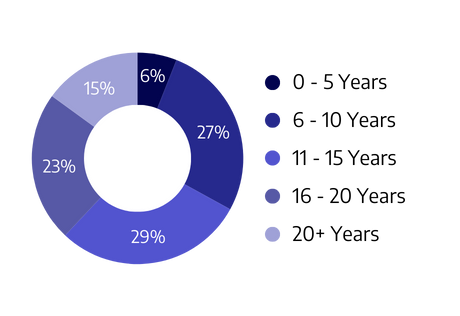
Work Experience
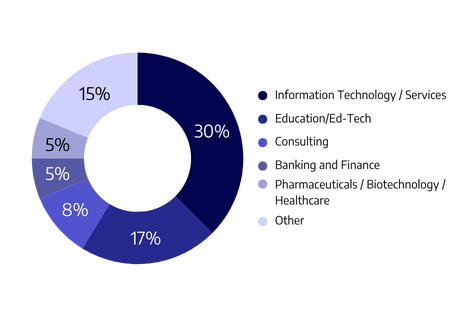
Industry
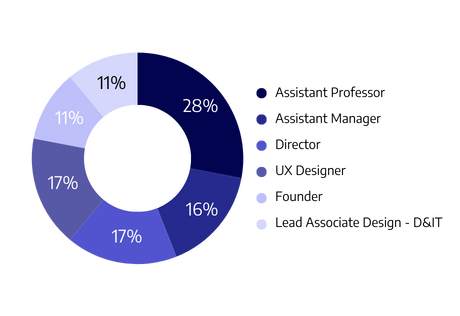
Job Functions
What Learners Say About the Design Thinking and AI Programme
Learners describe the Design Thinking and AI programme at IIM Kozhikode as a powerful combination of creativity, empathy, and emerging technology. They emphasise how the curriculum extends beyond theory, enabling them to apply design thinking and AI to real-world challenges. The mix of pre-recorded content, live sessions, and a practical capstone project made the experience both engaging and applicable. Many found the faculty’s insights and peer collaboration particularly valuable in developing a future-ready, human-centred approach to innovation.
Programme Modules
Module 1: Introduction to Design Thinking and Innovation
Origin and Purpose of Design and Innovation
Examples of Good and Bad Design/Innovation
Design Thinking and its Benefits
Applications of Design Thinking
The Fundamentals of Design Thinking
The Stanford Design Thinking Process
Design Thinking Process - The Unique Aspects
Key Features of the Design Thinking Process
Cognitive Models Applied in Design Thinking
Module 2: Innovation and Business Success
Innovation and its Importance
Factors that Trigger Innovation
Opportunities for Innovation in Business
Types of Innovation
Reasons for Failure of Innovations
Design Thinking for Innovation in Physical Products
Design Thinking for Innovation in Digital Products
Design Thinking for Innovation in Services
Design Thinking for Innovation: Other Applications
Deterrents to Innovation
Choosing the Right Innovation Path
The Three Lenses of Innovation
Using the Three Lenses of Innovation: An Example
Products and its Levels
Finding Product Market Fit (PMF)
Pain Killers and Vitamins
Product Life Cycle & Innovation Intervention
Module 3: Design Thinking with AI
Integrating AI into Design Thinking Processes: Pros and Cons
Problem Framing with AI Assistance
Cognitive AI and Design Thinking
Scenario Planning with AI
Measuring the Impact of AI in Design Thinking
Design Thinking Use cases with AI Applications
Module 4: Creativity and Innovation with AI
Understanding Human Creativity
Human Intuition vs. AI Algorithms
Role of AI in Enhancing Creativity
Evaluating Creative Outputs: Human vs. AI
Future of Creativity: Human and AI Synergy
Ethical Considerations in AI-Driven Creativity
Module 5: Design Thinking Approach for Idea Generation
Introduction to Problem-Framing Canvas
Problem-Framing Canvas: The Customer Pain Segment
Problem-Framing Canvas: The Business Goals Segment
Problem-Framing Canvas: The Ideas and Opportunities Segment
Preparing for Idea Generation
Creative Thinking
Critical Thinking
Creative Confidence
Introduction to Brainstorming
Examples of Brainstorming Scenarios
Brainstorming: Principles and Process
Methods of Brainstorming
Reverse Brainstorming
Module 6: Design Thinking Approach for Concept Development
The Innovation Idea Funnel
Parts of the Innovation Idea Funnel
Introduction to Concept Development
The Concept Development Process
Tools Used in Concept Development
An Introduction to Product Concept
Anatomy of a Product Concept
Mapping a Product Concept
Product Concept Statements
Introduction to Product Concept Ideation
Tools for Product Concept Ideation: Storyboard
Tools for Product Concept Ideation: Sketches and Wireframes
Tools for Product Concept Ideation: System Map
The Back of Napkin Pitch
Module 7: Design Thinking Approach for Concept Evaluation
Introduction to Assumption Testing
Testing Assumptions
Kano Model: An Introduction
Kano Model: Characteristics
Kano Model: Analysis and Checking for Assumptions
Introduction to Value / Ease Matrix
Value / Ease Matrix: Process
Introduction to Rapid Prototyping
Forms of Rapid Prototyping
The Rapid Prototyping Process
Advantages and Disadvantages of Rapid Prototyping
Preparing for Feedback
Module 8: Design Thinking Approach for Obtaining User Feedback
Introduction to Minimum Viable Product
Launching a Minimum Viable Product: Process
Customer Co-Creation: Introduction
Customer Co-Creation: Process
Learning Launches: Introduction
Learning Launches: Essentials
Learning Guide and Beyond
Getting Started on the Design Thinking Journey
Module 9: Iterative Design and Sustainability
Design Iteration for Continuous Improvement
Sustainable Design Principles and Practices
Lifecycle Assessment and Environmental Impact Analysis
Circular Design Thinking for Sustainability
Module 10: GenAI for Product and Process Innovation
AI-powered Ideation and Concept Generation Tools
Generative Design and AI-driven Prototyping
Rapid Prototyping with AI-based Simulation and Visualisation
AI-enabled Collaboration in Prototyping Processes and Innovation
Case Studies on GenAI-driven Product and Process Innovation
Module 11: Design Thinking Approach for New Product Development
Innovation as a Process
Innovative Ideas from Customers
Innovative Ideas from Supply Chain
Innovative Ideas from Employees
Innovative Ideas from Competition
Innovative Ideas from Academic Research and Technology
Opportunities for Innovation
Jeanne Liedtka’s Framework for Design Thinking
Tools Used in the Design Thinking Process
Visualisation in the Design Thinking Process
Module 12: GenAI for Market Research & Product Road Maps
Leveraging AI for User Insights
Sentiment Analysis of Customer Feedback (NLP)
Trend Analysis for Emerging Needs (ML)
Problem Framing with AI Assistance
Concept Generation with GenerativeAI
Module 13: Design Thinking Approach for Understanding Customers
Understanding Customers’ Expectations
Needs, Wants and Desires
The Iceberg Model
Maslow’s Hierarchy of Needs
Types of Data Required to Gather Information Regarding Customers
Research Methods to Gather Customer Data
Consumer Personas and its Advantages
Creating a Title: Details in Consumer Personas
Creating Customer Journey Maps
Benefits of Customer Journey Mapping
Introduction to Jobs to be Done (JTBD)
Types of JTBD and Examples
Module 14: Design Thinking Approach for Deciphering Needs
Introduction to Value Chain Analysis
Levels of Activities in a Value Chain
Introduction to Mind Mapping
Creating a Mind Map
Introduction to Value Proposition Canvas
Value Proposition Canvas: Customer Profile Segment
Value Proposition Canvas: Value Proposition Segment
Advantages of the Value Proposition Canvas
Creating a Value Proposition Canvas: Example
Introduction to User Need Statement
Components in a User Need Statement
Creating a User Need Statement
Introduction to How Might We Statements
Framing a How Might We Statement: Phases
Examples of How Might We Statements
Module 15: GenAI for Customer Engagement & User Experience
AI-powered Customer Segmentation and Targeting
Personalised Content Creation and Delivery
Utilising AI for User Testing and Feedback Analysis
Ensuring Accessibility and Inclusivity in AI-powered Design
Module 16: Agile Design and Technology-driven Innovation for Business
Agile Methodologies in Design and Development
Data-driven Design Decision Making
Continuous Improvement through Iterative Design Cycles
Design Metrics and KPIs for Agile Environments
Integration of Design Thinking with Technology and Business Strategy
Design Leadership and Organisational Transformation
Design-driven Innovation for Business Growth
Business Model Innovation through Design Thinking
Module 17: Marketing of Innovation and Designing Business Models
Business Model Canvas
Modules of the Business Model Canvas
Benefits of Using a Business Model Canvas
Developing a Business Model Using the Canvas
Positioning and Differentiation
Product Differentiation
Positioning
Positioning Statement
Go-to-market Strategy
Adoption of Innovation
Innovation Adopters
Module 18: GenAI for Designing Business Models
AI-powered Business Model Innovation Tools
Predictive Analytics for Business Model Optimisation
AI-driven Market Analysis for Business Model Design
Personalised Business Model Generation with AI
Module 19: Introduction to Services (Service Products for the New Economy - Earlier Name)
Understanding Service Products in New Economies
Nature of Service Businesses and its Importance
Characteristics of Services
Point of Differences between Goods and Services that has Implications for Businesses and Design
Module 20: Understanding Customer Behaviour in Services
Consumer Behaviour Related to Services
The three-stage Model of Consumer Behaviour Applied to Services
Post-purchase Evaluation: Modelling Consumer Satisfaction with Services
Environmental Perspectives on the Service Encounter
Perceived Control, Script & Role Theories
Module 21: Gen AI on Consumer Behaviour Analysis, Personalised service delivery
AI-powered Customer Behavior Analytics
Predictive Modeling for Customer Behavior Forecasting
Personalised Service Recommendations with AI
Dynamic Pricing and Offer Optimisation with AI
Module 22: Service Models and GenAI-Augmented Servicescape Design
Types of Service Models
Service Blueprinting and Process Design
Service Design Tools and Techniques
Service Innovation and Business Model Transformation
Personalised Customer Experiences in Physical and Digital Spaces
AI-powered Customer Journey Mapping for Servicescapes
Module 23: Change Management in Products and Services
Managing Organisational Change in Innovation Processes
Change Management Strategies for Product and Service Launches
User Adoption and Change Communication Strategies
Continuous Improvement and Change in Agile Environments
Module 24: Impact of AI on Design Thinking and Innovation and Future of AI
AI's Role in Enhancing Design Thinking Processes
Ethical and Social Implications of AI in Innovation
Future Trends in AI and Design Thinking Integration
AI's Potential to Transform Industries and Societies
Note: Modules/ topics are indicative only, and the suggested time and sequence may be dropped/ modified/ adapted to fit the total programme hours.
Programme Directors

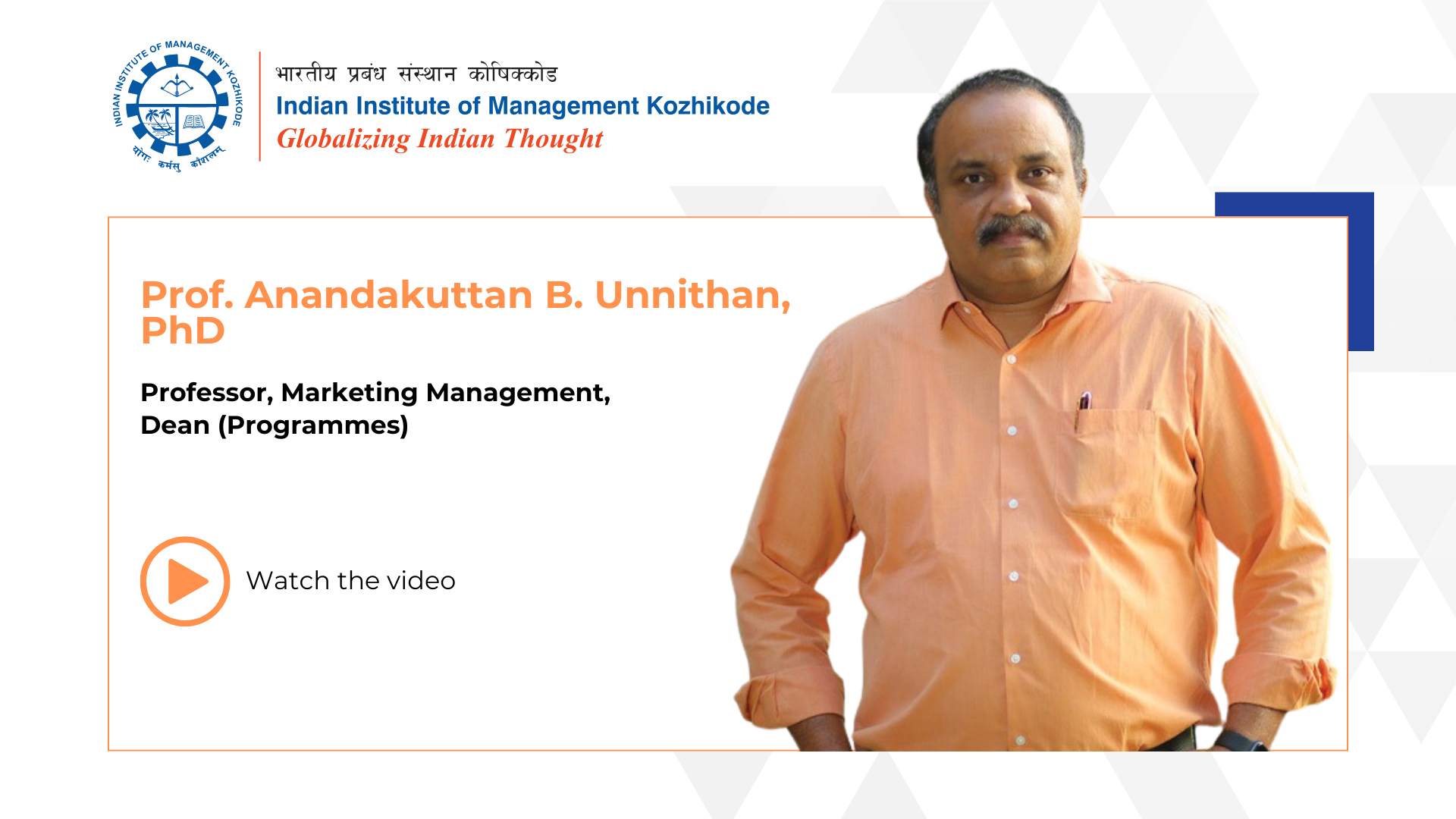
Prof. Anandakuttan Unnithan
Professor, Marketing Management, Dean- Programmes ,Indian Institute of Management Kozhikode
Prof. Anandakuttan B Unnithan obtained his PhD inMarketing from Cochin University of Science and Technology, Kochi, Kerala. He has extensive experience of two decades as a bus...

Prof. Deepak S Kumar
Associate Professor, Marketing, Indian Institute of Management Kozhikode
Deepak S Kumar completed his graduation in Architectural Engineering
from the National Institute of Technology Calicut (NITC) and his Fellow
(Ph.D.) from the Indian Institute ...

Prof. M Geeta
Professor, Marketing Management, Indian Institute of Management Kozhikode
Prof. M. Geetha is a Professor in Marketing Management area at Indian Institute of Management Kozhikode. She obtained her PhD in Marketing from Indian Institute of Technology ...
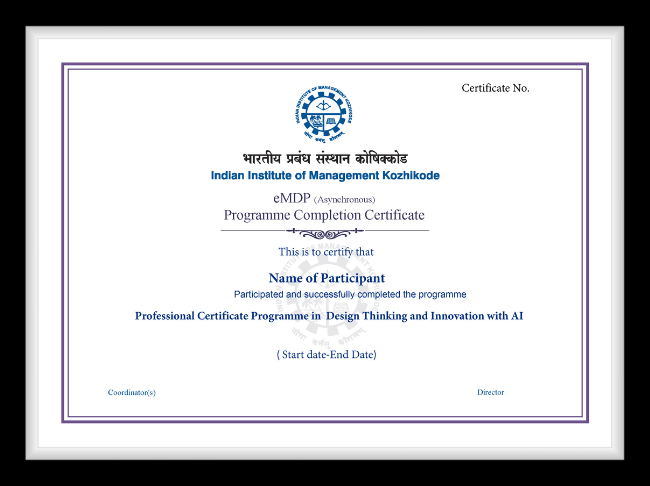
Programme Certificate
IIM Kozhikode will award a certificate of successful completion to participants who complete the programme successfully with 70% of score in evaluation.
A participant with less than 70% of score in the overall evaluation will not be awarded any certificate.
Note: All certificate images are for illustrative purposes only and may be subject to change at the discretion of IIM Kozhikode.
Learning Outcomes
Describe the fundamentals of design thinking and its application in innovation.
Explain the role of AI in enhancing creativity and driving business success.
Use AI to create and refine design prototypes and assess their impact on sustainability metrics.
Create innovative market research strategies, product concepts and customer engagement campaigns using generative AI.
Design innovative business models and service delivery systems by integrating Agile design principles and AI technologies.
Analyse the impact of AI on consumer behaviour and service design.
Evaluate the effectiveness of change management strategies in implementing AI-driven design thinking and innovation initiatives, predicting future challenges and opportunities.
Emeritus Career Services
15 Recorded sessions and resources in the following categories:
Resume and Cover Letter
Navigating Job Search
Interview Preparation
LinkedIn Profile Optimisation
Please note:
IIM Kozhikode or Emeritus do NOT promise or guarantee a job or progression in your current job. Career Services is only offered as a service that empowers you to manage your career proactively. The Career Services mentioned here are offered by Emeritus.IIM Kozhikode is NOT involved in any way and makes no commitments regarding the Career Services mentioned here.
This service is available only for Indian residents enrolled into select Emeritus programmes.
The Learning Experience
Join a global community of 300,000+ professionals across 200 countries who have advanced their careers with Emeritus. In a recent survey, 9 out of 10 learners said their expectations were met or exceeded.
From day one, you’ll get access to carefully designed course material, live interactions, and a structured cohort-based journey that keeps you on track. Our approach blends flexibility with accountability—so you don’t just start, you finish strong.
And you’re never on your own. A dedicated program support team is available 7 days a week to guide you with platform queries, technical support, or any learning-related questions—so you can focus on what really matters: your growth.
A dedicated programme support team is available 7 days a week to answer questions about the learning platform, technical issues, or anything else that may affect your learning experience.
.
FAQs
What is a design thinking programme by IIM Kozhikode?
The Design Thinking and Innovation with AI Programme by IIM Kozhikode is a 25-week online design thinking course designed to foster creativity and strategic problem-solving. It focuses on solving complex challenges using design thinking processes like empathy-driven ideation, prototyping, and AI integration. Participants engage in live sessions, real-world case studies, and hands-on projects, making it one of the most comprehensive options for those seeking design thinking for innovation.
What is the mode of this programme?
This design thinking certification combines online live sessions with pre-recorded video lectures, providing flexibility for professionals to learn at their own pace while engaging with industry experts and IIM Kozhikode faculty.
Who should do this programme?
This design thinking and innovation programme is ideal for mid to senior-level professionals, career changers, and entrepreneurs aiming to master design thinking and apply AI-driven strategies for innovation. It is also suitable for those looking to explore applied design thinking and advance their careers in business or technology. This programme from IIM Kozhikode offers the practical skills and credibility needed to lead with creativity and innovation.
Is this Design Thinking and Innovation with AI Programme by IIM Kozhikode worth it?
Yes, this design thinking and innovation programme equips professionals with practical skills in applied design thinking and AI integration. It offers live sessions, case studies, and an IIM Kozhikode certification, making it ideal for those aiming to innovate and advance their careers.
Will I receive a certificate upon completing the programme?
Yes, participants who successfully complete the design thinking certificate programme with a minimum score of 70% will receive a prestigious certification from IIM Kozhikode. This design thinking certification can be shared on resumes, LinkedIn profiles, and with potential employers.
Elevate your career with this programme!
Flexible payment options available.
Starts On